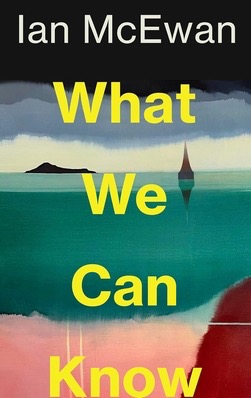
You just never know how a book will land with a reader. You pick it up full of hope that something special is about to happen, and every now and then something does. To be fair, I was full of expectation when I picked Ian McEwan’s What We Can Know (2025) because I have read enough of his work to know that curling up with one of his books I am in for a treat.
I will offer some personal reasons I was glad to read the work of this master-writer but first I will suggest that this book will be of interest to a wide variety of readers: journalists, academics, climate change readers, eco-theologians, poets, futurists and probably more. The novel follows intertwined stories taking place in 2014 and 2199 following a group of people present at a special reading of a poem by a renown poet (2014) which poem has gone missing, and some academics (2199) living in a post-apocalyptic climate changed world, interested in the night of the reading and finding the poem. It is, all in all, a very fun book, more playful than I am used to from McEwan. Suffice it to say, if you are looking for something to read there is a good chance this one is worth your time.
For my part, I particularly enjoyed it because it resonated with two threads in my life. The first, and less important one, is that I spent years reading the Beatnik Generation works, and looked fondly and their stories of wild nights of jugs of wine and poetry. One of their most famous nights has gone down in history as The Six Gallery Reading. It took place in San Francisco in 1955 and included the first public reading of Allen Ginsburg’s Howl.
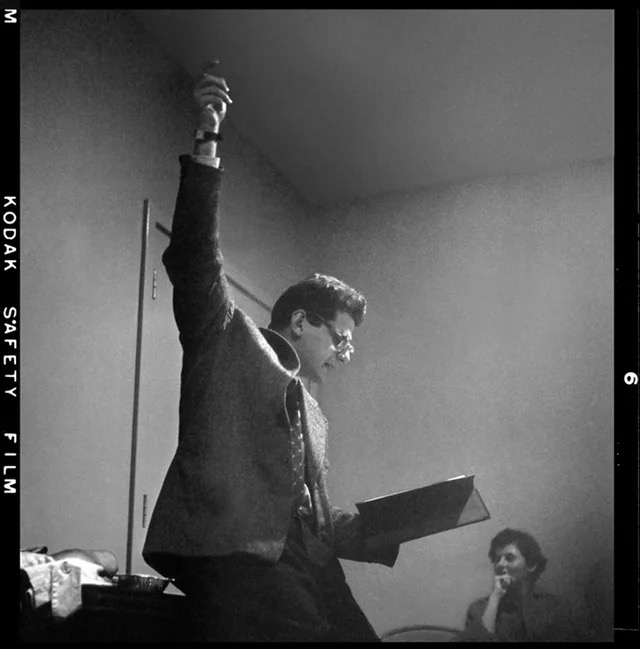
For me, the very idea of a poetry reading with POWER has always felt exciting. The electricity in the air, the people doing something they think might be important, they hope will be important, the rawness of it all, as around 100 people gathered to listen to 6 poets read (for several, including Ginsburg, this as their first ever public reading), history have demonstrated that they were on to something. The whole thing was delightfully captured by Jack Kerouac in Dharma Bums. It was a birthing moment, and something I fell in love with and studied, even writing a Master’s thesis on this ragtag bunch. So, for me, the storyline of What We Can Know working around a central moment in time itself centred around a poetry reading, well, it’s like catnip. It would be interested to know if McEwan has a specific reading that he experienced in mind as he writes of the night in this novel.
The poem in the book is lost to time, it becomes legendary because the poet was so well-known and highly regarded and there people at the reading wrote about their impressions of it in their diaries over the following months. It’s inaccessibility heightened its allure. So the novel contains a bit of mystery and adventure as the academics sleuth to try to locate it.
This happens to resonate with me because more than 20 years ago I wrote a poem called “The North Star” for my then girlfriend, Mary. Now, I am no Ginsburg or McEwan (or even McEwan’s fictional poet) but I am a man capable of holding tender the writing of a poem out of pure love for a woman, slowly writing and rewriting, trying to get it perfect, a poem meaningful only to two people, intimate, pure, connective.
So, I remember feeling really proud of it when I finally considered it ready to be gifted, of being sure she would love it, and nevertheless sweating with excitement, bouncing really, as I prepared to give it to her, holding my breath as she read it, feeling so terribly vulnerable, then watching her laugh and smile, the light in her eyes glowing brighter and brighter, the sense of relief that she loved it, that I had conveyed my love to her in a way she could receive…the only bummer is that somehow we lost the poem and dolt that I am I had only the one hand-written copy. So I too have a lost poem written for a loved one.
These two threads have me thinking about how we never know what our words will conjure up for others, what stories and emotions, what memories we may bring to the surface. Beyond that, just as a novel well-written and interesting, McEwan’s work is worthy. Whether you stumble upon circumstances that bring you closer to his work or not I commend this novel to you.
I wonder if he would be delighted to hear of such serendipitous reading of his work. Maybe you have had this in your reading, stories that feel bizarrely close to home. It’s just one more reason to keep on reading.

Leave a Reply